

"Pro 3D pen" is one of the most common search terms in 3D drawing. Behind this phrase, two very different audiences meet: adults looking for a serious creative tool, and parents assuming a "pro" model will naturally be better for their child. Both viewpoints make sense, but they lead to entirely different products. Here is what you need to make an informed choice.
What is a professional 3D pen?
In manufacturers' terminology, a "pro" 3D pen refers to a high-temperature pen designed for PLA and ABS filaments—the same used in 3D printers. The tip gets very hot to melt rigid plastic: this allows for strong, precise creations favored by makers, artists, and DIYers for prototyping, repairs, or sculpting.
These models are recognized by their features: display screen, degree-level temperature control, adjustable extrusion speed, multi-filament compatibility. All settings designed for experienced users who know why they're adjusting them.
Who are these pens made for?
For adults and supervised teenagers. The tip of a high-temperature pen gets as hot as a clothes iron: the tool isn't dangerous on its own, but it requires the same caution as a hot glue gun or a soldering iron. It's a workshop tool, not a toy.
If you are a creative adult looking for this type of pen, specialized 3D printing brands offer high-quality models, generally priced between $50 and over $200 depending on settings and supported materials.
"Pro" doesn't mean "better": the trap when buying for a child
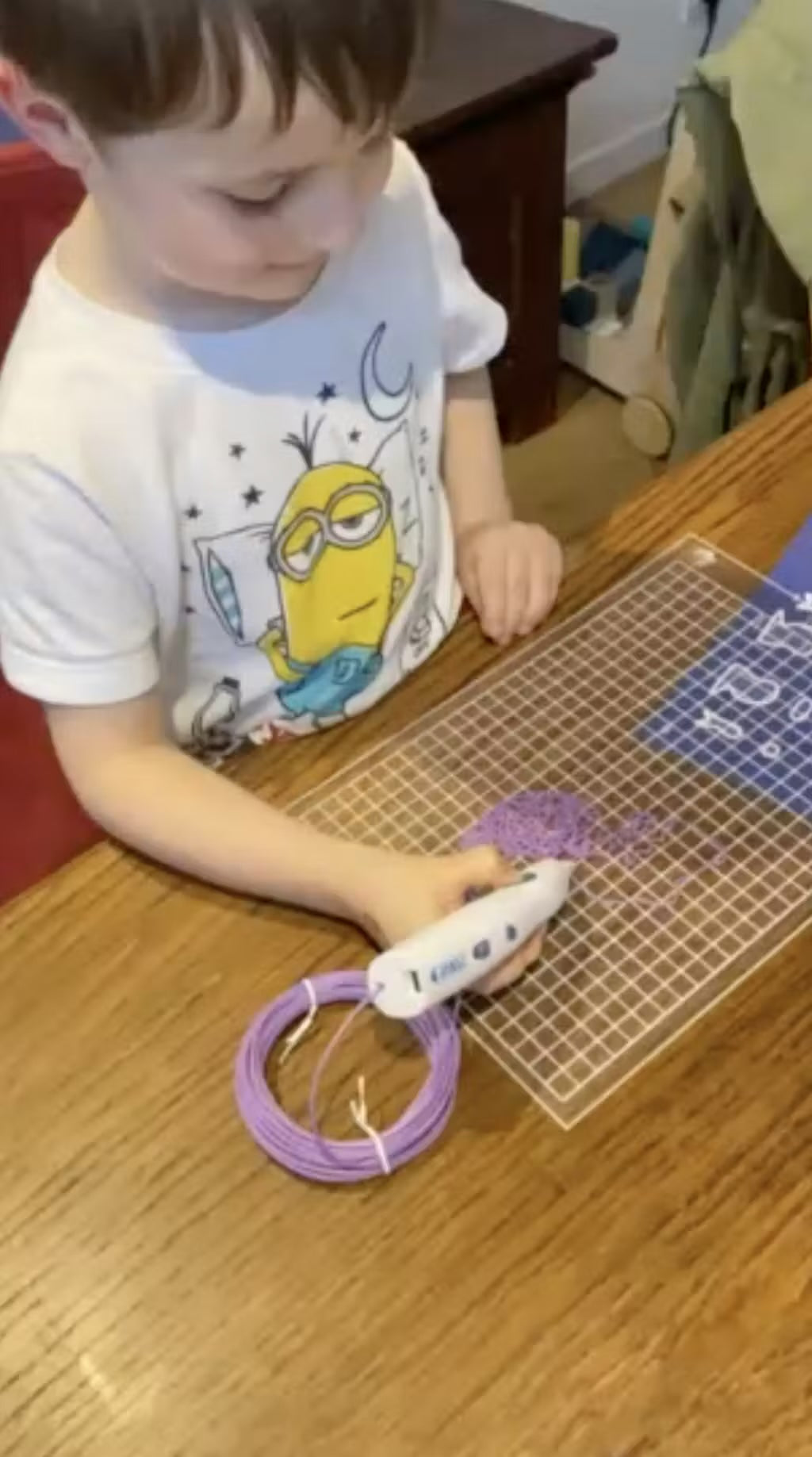
This point needs to be stated clearly: a professional 3D pen is not a better 3D pen for a child. In fact, it's the opposite. A child aged 6 or older holds the pen close to the tip, rests it on their lap, and shares it with their younger sibling. Surface temperature then becomes the #1 criterion, far ahead of precision controls. Our article cold vs hot 3D pen details this essential difference.
"Pro" settings also create a barrier to independence: a child cannot calibrate an extrusion temperature. To create on their own, they need a pen that simply works, at the right temperature, straight from power-on.
The real "pro" criteria when the user is 6 or older
The quality of a kids' 3D pen isn't measured by the number of buttons, but by more subtle criteria:
- a clearly stated, quantified, and certified surface temperature, not a vague "low temperature" claim;
- CE compliance and testing under the EN71 toy safety standard;
- a smooth, consistent filament flow without jamming, which is the primary reason kids give up on low-end models;
- long-term refill availability, without locked proprietary cartridges;
- responsive customer support and a real warranty, the hallmark of manufacturers who stand behind their product.
Against these criteria, the rankings flip completely: some "pro" pens that look impressive on paper become poor family choices, and a pen designed for kids becomes the most professional option available. Our comparison cheap vs quality 3D pen shows this screening in action.
The Pen'Up choice: professional quality, designed for kids
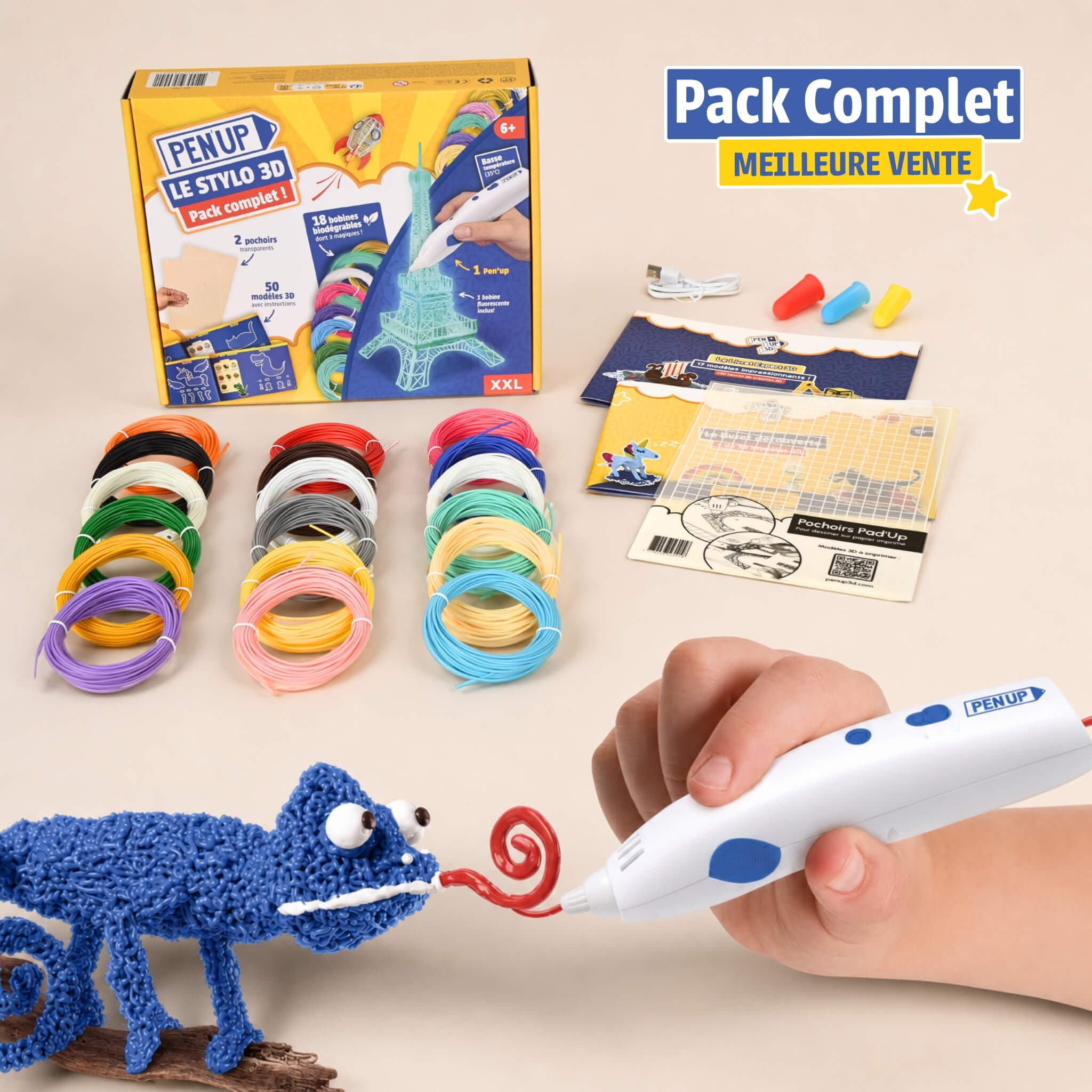
This is exactly the design philosophy behind the Pen'Up 3D, created in France for kids aged 6 and up:
- 35°C (95°F) at the tip surface, a temperature verified in the lab;
- CE compliant and tested to EN71 standards;
- low-temperature Fil'Up filament, with refills always available;
- cordless, usable while charging, auto-sleep mode;
- lifetime warranty and French customer service based in Montauban;
- 4.88/5 across over 2,300 verified reviews.
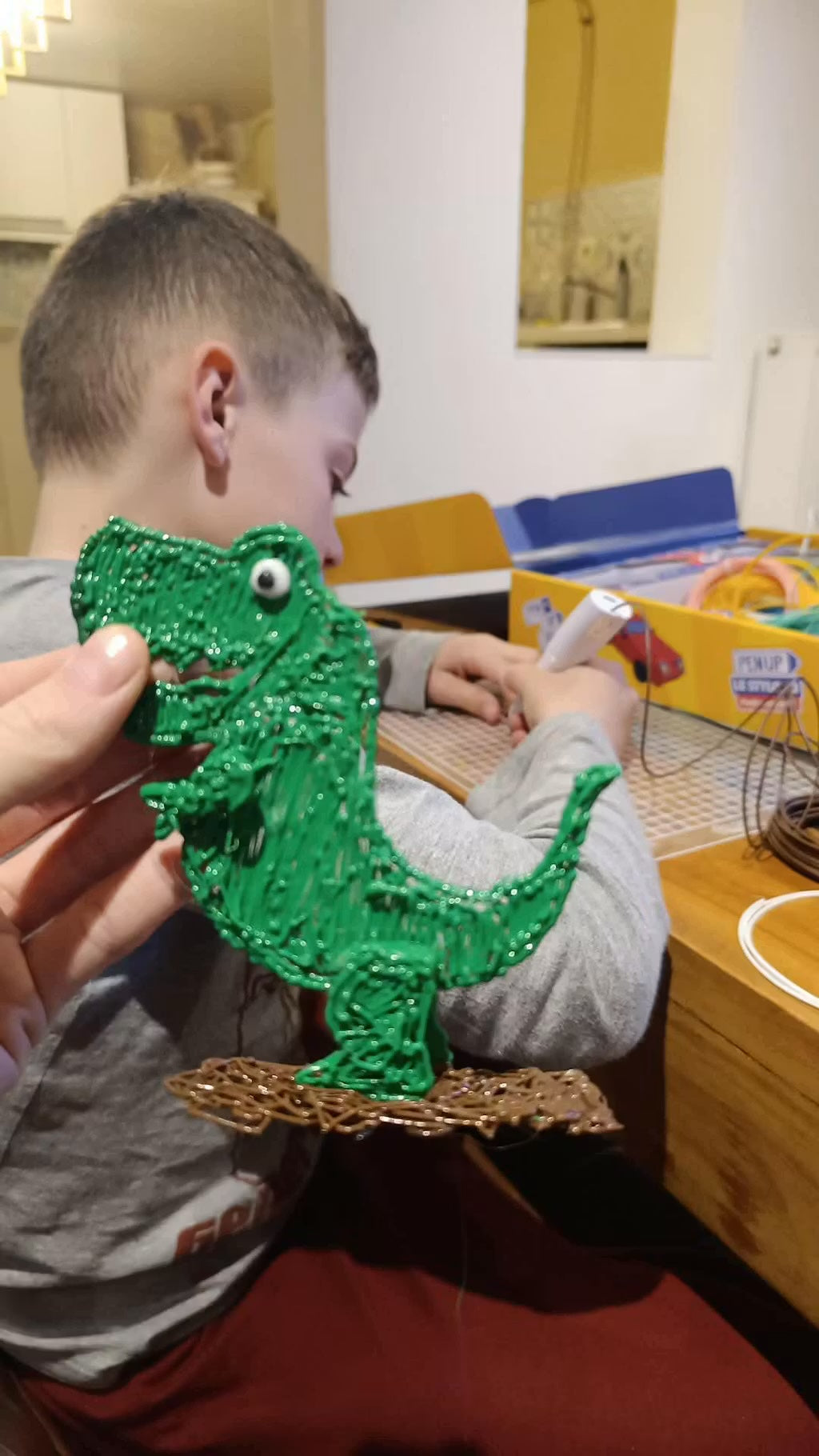
And to progress like a pro, technique matters more than the tool: our free printable templates teach children how to trace cleanly, fill within lines, and assemble in 3D.
Frequently Asked Questions
Can a child use a professional 3D pen?
Before teenage years, it is not recommended: the tip gets far too hot for children's hands, and the settings require constant adult supervision. A low-temperature pen designed for their age will give them better results independently.
How much does a pro 3D pen cost?
Quality high-temperature models range from around €50 to over €200. Beware of sub-€30 models sold as "professional" on marketplaces: the term is used purely as marketing hype, rarely as a kept promise.
Can my child upgrade to a pro pen later?
Yes, and that is the right progression: learn 3D drawing techniques with a low-temperature pen starting at age 6, then move on to PLA and ABS filaments in the teenage years if the passion continues. All learned skills transfer completely.