

Updated on July 19, 2026
Finding a screen-free activity for kids that lasts more than five minutes can sometimes feel like a real challenge. Between tablets that grab attention and toys abandoned after two days, many parents are looking for simple, hands-on, truly engaging ideas. Good news: there are dozens of ways to keep kids entertained without screens, without guilt, and without turning the living room upside down. Here are 10 family-tested and approved ideas, starting with the hands-down favorite.
Why offer screen-free activities (guilt-free)?
Because balance matters more than outright bans: 20 minutes of hands-on activities are often enough to refocus a child aged 6 or older. They manipulate materials, focus, develop fine motor skills, and feel proud of a creation made with their own hands—while the tablet stays on the shelf. No guilt needed: a weekend cartoon never hurt anyone.
This observation is not just a parent's intuition. The report “Children and Screens: In Search of Lost Time”, submitted to the French President in April 2024 by a panel of ten experts, estimates that 7- to 19-year-olds spend an average of over 3 hours a day in front of screens and recommends, after age 6, moderate exposure that leaves room for varied activities. Its authors also explicitly call for expanding alternative activity options to screen time: play, creativity, human connection.
Let's make it clear right away: the goal is not to demonize screens. Research itself invites nuance: a large-scale study conducted on 120,000 teenagers (Przybylski & Weinstein, 2017, Psychological Science) suggests that moderate screen use is not associated with lower well-being, and that effects measured beyond certain thresholds remain small. The real key is balance: offering children moments where they create, handle materials, focus, and come away proud of something made with their own hands.
Hands-on activities develop fine motor skills, patience, and creativity—skills that screens, by nature, do not stimulate. Above all, they create that little miracle every parent knows: a child who is absorbed, calm, and happy. No need to spend all day on it: twenty minutes are often enough.
What research says: a small US study (Kaimal et al., 2016, Art Therapy) measured a drop in cortisol, a stress-related hormone, in 39 adults after 45 minutes of free hands-on art-making, regardless of drawing skill level. The sample size is modest and adult, but it illustrates why so many people describe hands-on activities as a feel-good moment.
What are the 10 screen-free creative activities that truly keep kids engaged?
The 10 activities that work best: 3D pen (ages 6+, 35°C tip), blanket fort, homemade playdough, treasure hunt, free drawing, beading, family baking, puppet shows, container gardening, and building toys. The most engaging ones are those that leave a tangible creation children can keep or give as a gift.

| Activity | Recommended age | Budget | Skills developed |
|---|---|---|---|
| 3D pen | from age 6 | from €49.99 | Creativity, fine motor skills, focus |
| Blanket fort | Ages 3–10 | free | Imagination, independence |
| Homemade playdough | Ages 3–8 | virtually free | Fine motor skills |
| Treasure hunt | Ages 4–12 | free | Logic, movement |
| Free drawing and coloring | Ages 3–13 | a few euros | Expression, creativity |
| Beads and bracelets | Ages 5–12 | a few euros | Fine motor skills, concentration |
| Family cooking | Ages 4–13 | virtually free | Quantities, autonomy |
| Puppet theater | Ages 4–10 | virtually free | Language, imagination |
| Container gardening | Ages 4–13 | a few euros | Patience, observation |
| Puzzles and building sets | Ages 3–13 | variable | Logic, patience |
1. The 3D pen: drawing in 3D
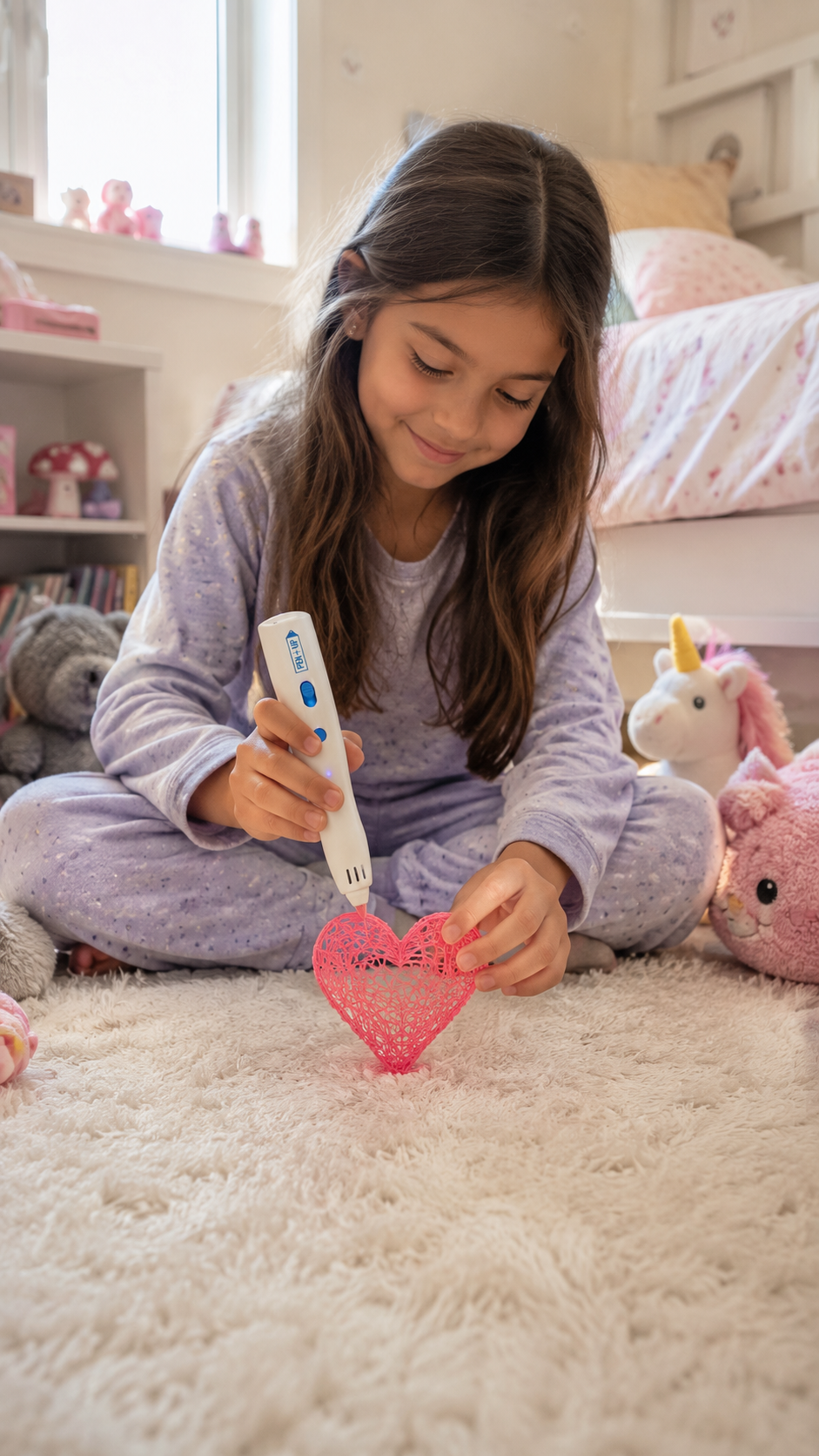
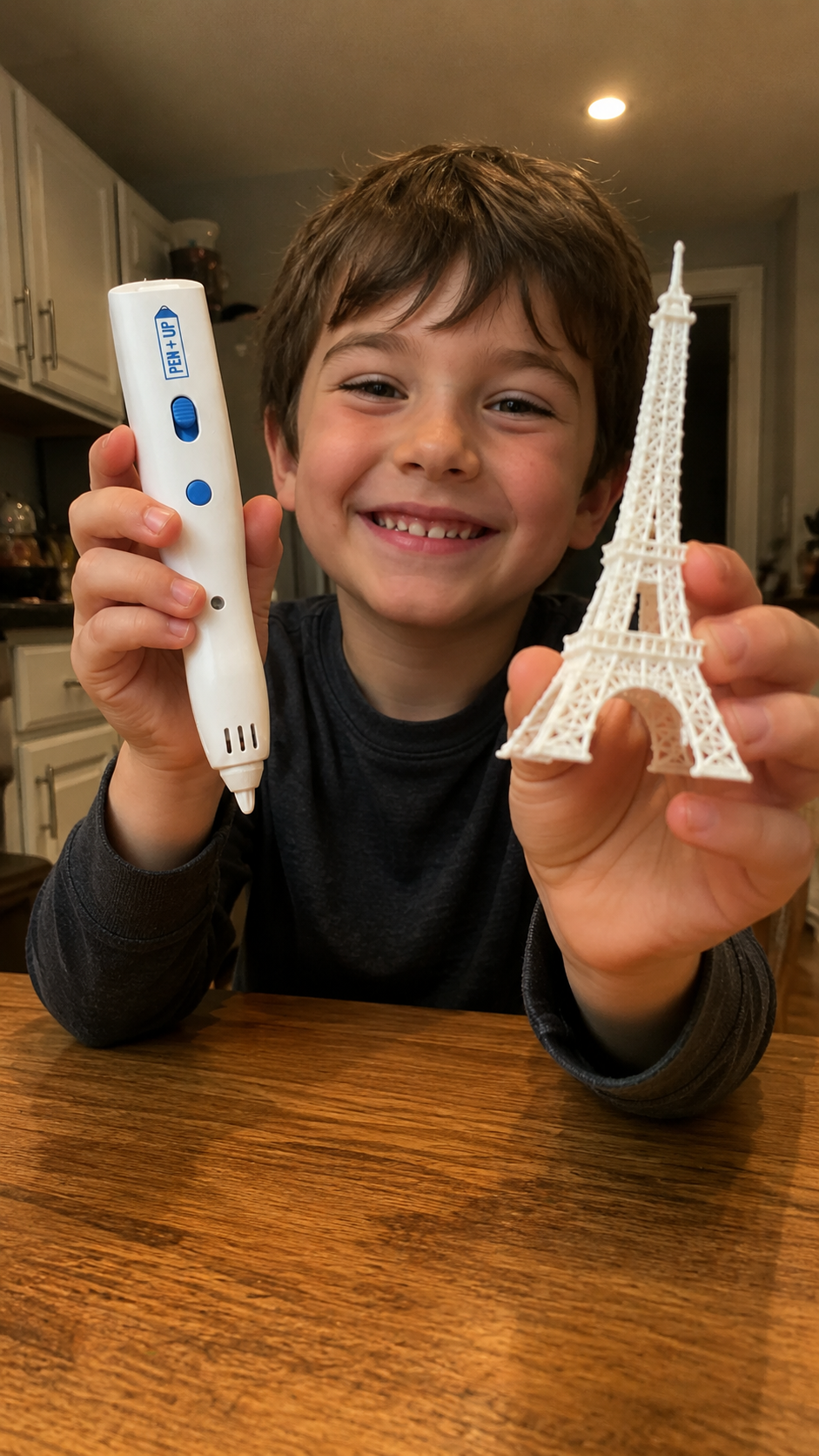
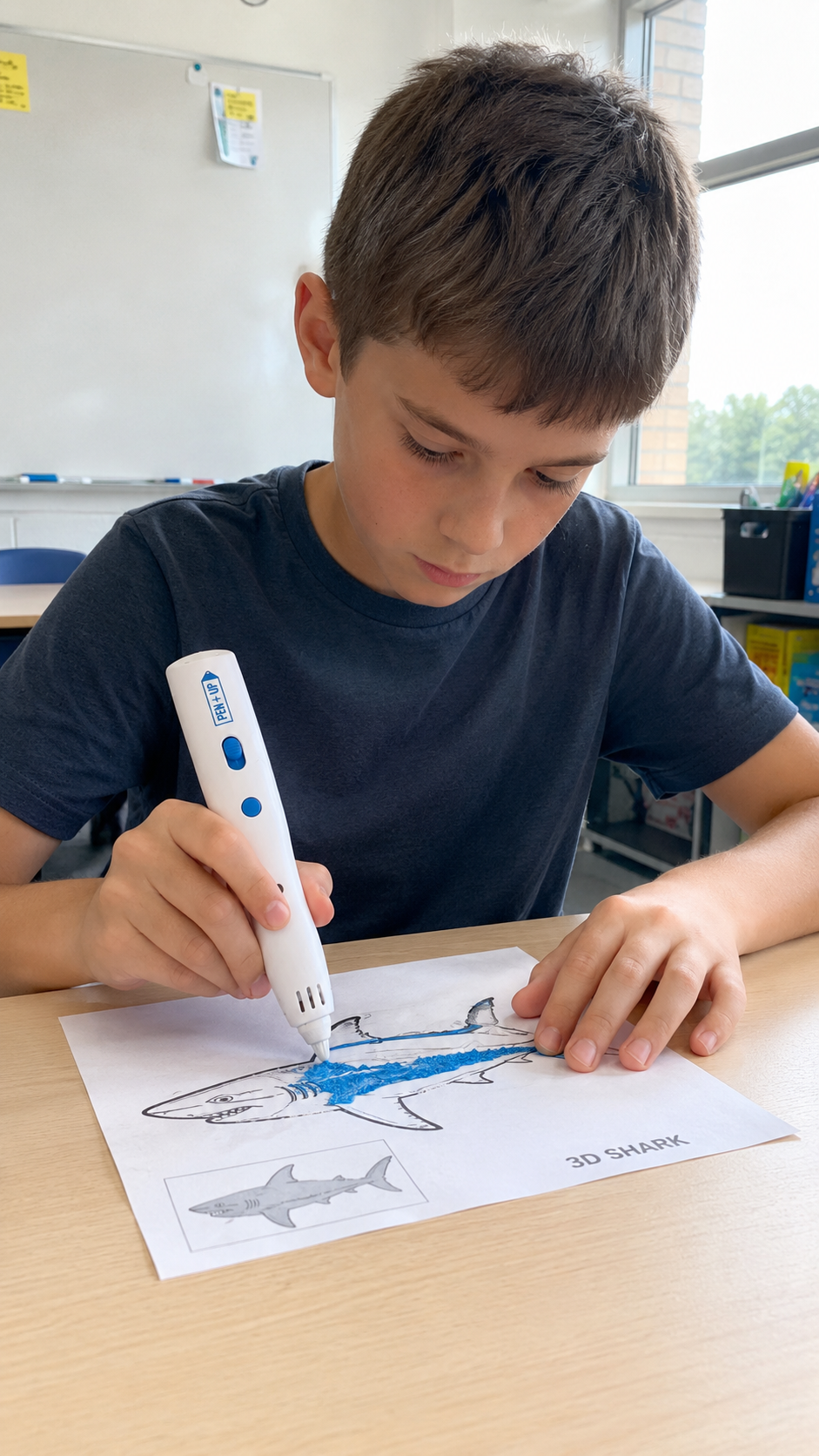
It is the most surprising screen-free creative activity, and by far the one that keeps kids busy the longest. With a 3D pen, children don't just draw on paper anymore: they extrude a flexible plastic filament that hardens in seconds, and they create 3D objects—a flower, an animal, a name, a small Eiffel Tower. No screens, no computers, just imagination and hands.
On a model designed for kids, the tip doesn't get hot like an adult pen: its surface temperature stays low (35°C / 95°F on the Pen'Up 3D pen, verified by a third-party laboratory), so kids can touch it with no burn risk. Suitable from age 6, cordless while drawing with about 1 hour of battery life, it combines focus, pride, and creativity—exactly what you want from an activity that lasts. Rated 4.88/5 across 2,300 verified reviews, it is available on its own for €49.99; to get off to the best start, the Pen'Up 3D Complete Pack (€99.99) includes the pen, stencils, templates, and multiple color filaments.
2. Blanket fort
The timeless, all-time classic. A few chairs, a large blanket, two or three cushions, and you have a secret hideout. It's free, sparks imagination, and can keep kids busy for an entire rainy afternoon.
3. Homemade playdough
Flour, salt, water, a splash of oil, and a few drops of food coloring: homemade playdough comes together in five minutes and provides hours of tactile play. Perfect for younger children, it gently builds little finger muscles.
4. Indoor treasure hunt
Hide a few items, draw some clues, and send your child on an adventure. This activity combines logic, movement, and imagination, working just as well indoors as in the backyard.
5. Free drawing and coloring
Markers, colored pencils, paint: nothing beats a large blank sheet of paper to let kids express what's on their mind. Vary the mediums (rocks, cardboard, tubes) to keep things exciting.
6. Beads and bracelets
Stringing beads is an excellent activity for fine motor skills and focus. Children end up with a bracelet or keychain they made themselves, which they will be proud to give as a gift.
7. Family cooking
Baking cookies or cakes is a creative activity in its own right: kids measure, mix, and shape. Bonus: you get to enjoy the delicious result while practicing math and quantity concepts along the way.
8. Puppet theater
Using socks, buttons, and a bit of felt, make puppets, then invent stories. An activity that builds language skills and imagination.
9. Container gardening
Planting seeds, watering, watching them grow: nothing beats this for learning patience. Even a windowsill is enough to grow herbs or flowers.
10. Puzzles and building toys
Puzzles, blocks, wooden planks: building toys remain a surefire way to keep children entertained independently while developing logic and patience.
How to make a screen-free activity last?
Four habits prevent giving up after 10 minutes: setting a concrete goal (“make a gift for Grandma”), preparing supplies in advance, favoring creations with a tangible outcome to keep or gift, and varying activities regularly. A well-prepared 20-minute session often holds attention longer than an improvised hour without a clear goal.
- Set a concrete goal: “make a gift for Grandma” is much more motivating than “draw something.”
- Prepare materials in advance: an activity that's ready to go is much more likely to succeed.
- Focus on activities with tangible results: a creation you can keep, display, or give away fosters pride and makes kids want to create again.
- Switch things up regularly: alternating activities prevents boredom and keeps the novelty alive.
A fifth tip is well worth knowing: let the child take the lead. A study from the University of Colorado (Barker et al., 2014, Frontiers in Psychology) observed that 6- to 7-year-olds who spend more time in self-directed, free activities perform better in tasks requiring self-organization. It is a correlation, not proof of cause and effect, but it aligns with the intuition of many parents: setting up the structure and supplies, then letting the child decide what to build, results in longer-lasting play sessions.
That is precisely why the 3D pen is so popular with families: each session yields a tangible object, the child makes progress, and the desire to build the next project comes naturally. To learn more, our complete guide to 3D pens for kids answers all your questions (age recommendations, safety, how to choose).
FAQ: Screen-free activities for kids
Which screen-free activity keeps a child busy the longest?
Creative activities that leave a tangible result, such as 3D pens, beading, or building sets, generally keep kids engaged the longest, as children see their project progress and want to finish it. Conversely, activities without a clear goal tend to fizzle out more quickly.

What age are these activities suitable for?
Most of these ideas are suitable from ages 4–6. For the 3D pen, the recommended age is 6 and up, with no upper limit. For kids under 6, adult supervision is recommended.
How to reduce screen time without meltdowns?
The key is not sudden restrictions, but offering an engaging alternative at the right time. Having an activity ready to go, complete with a tangible goal, often works much better than simply telling them to turn off the tablet. That is also the core message of the 2024 expert report on children and screens: rather than focusing solely on limits, inspire children to engage in different ways.
Is a 3D pen truly a screen-free activity?
Yes, absolutely. The 3D pen is a 100% hands-on activity: no screens, no computers, and no apps. That is precisely one of the reasons parents appreciate it as an alternative to tablets.
Are these activities expensive?
Many are virtually free (blanket fort, homemade playdough, treasure hunt). Others, like the 3D pen (from €49.99) or building sets, require a modest investment but last a long time and can be used over and over again.