

Updated November 11, 2026
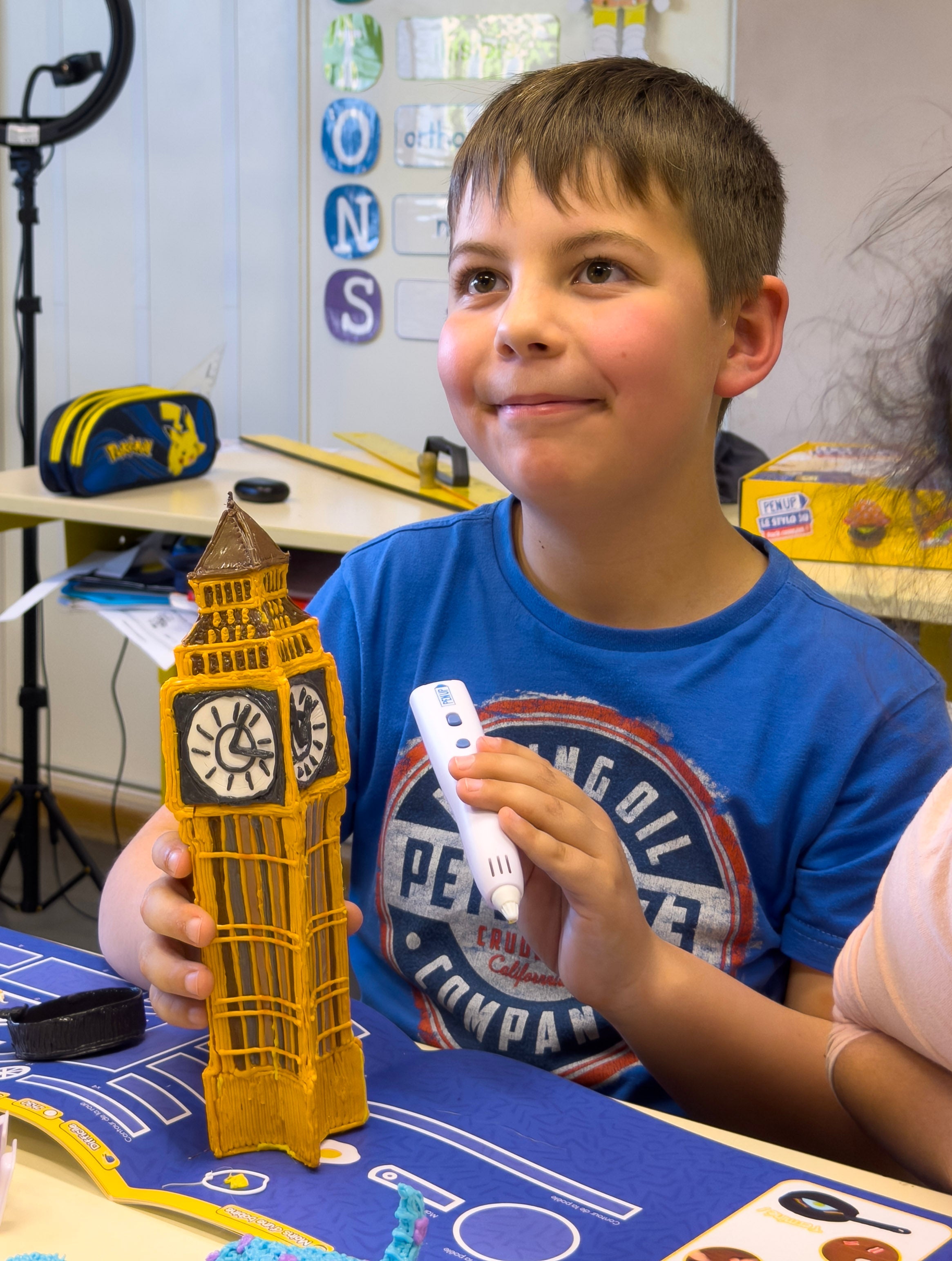
Is a 3D pen dangerous for a child? The real danger with a 3D pen is the heat of its tip, which depends entirely on the model. A standard 3D pen melts PLA or ABS and heats up to around 200 °C: it can cause burns and is not designed for a young child. A 3D pen designed for children operates at a low temperature. On the Pen'Up 3D pen, the tip never exceeds 35 °C, a figure verified in a laboratory. That is below body temperature (37 °C), so there is no risk of burns.
Three other points deserve your attention before giving a 3D pen as a gift: age (children can create independently from age 6; never for children under 36 months), filament (Fil'Up spools designed for the pen that melt at a low temperature) and compliance (the Pen'Up 3D pen meets applicable requirements, bears the CE marking and has undergone EN71 testing). Here’s a closer look at each point: what’s true, what’s less clear-cut and how to choose.
Christmas 2026: Christmas packs, code NOEL10 and delivery are all covered in our Christmas section below.
What causes the risk of burns with a 3D pen?
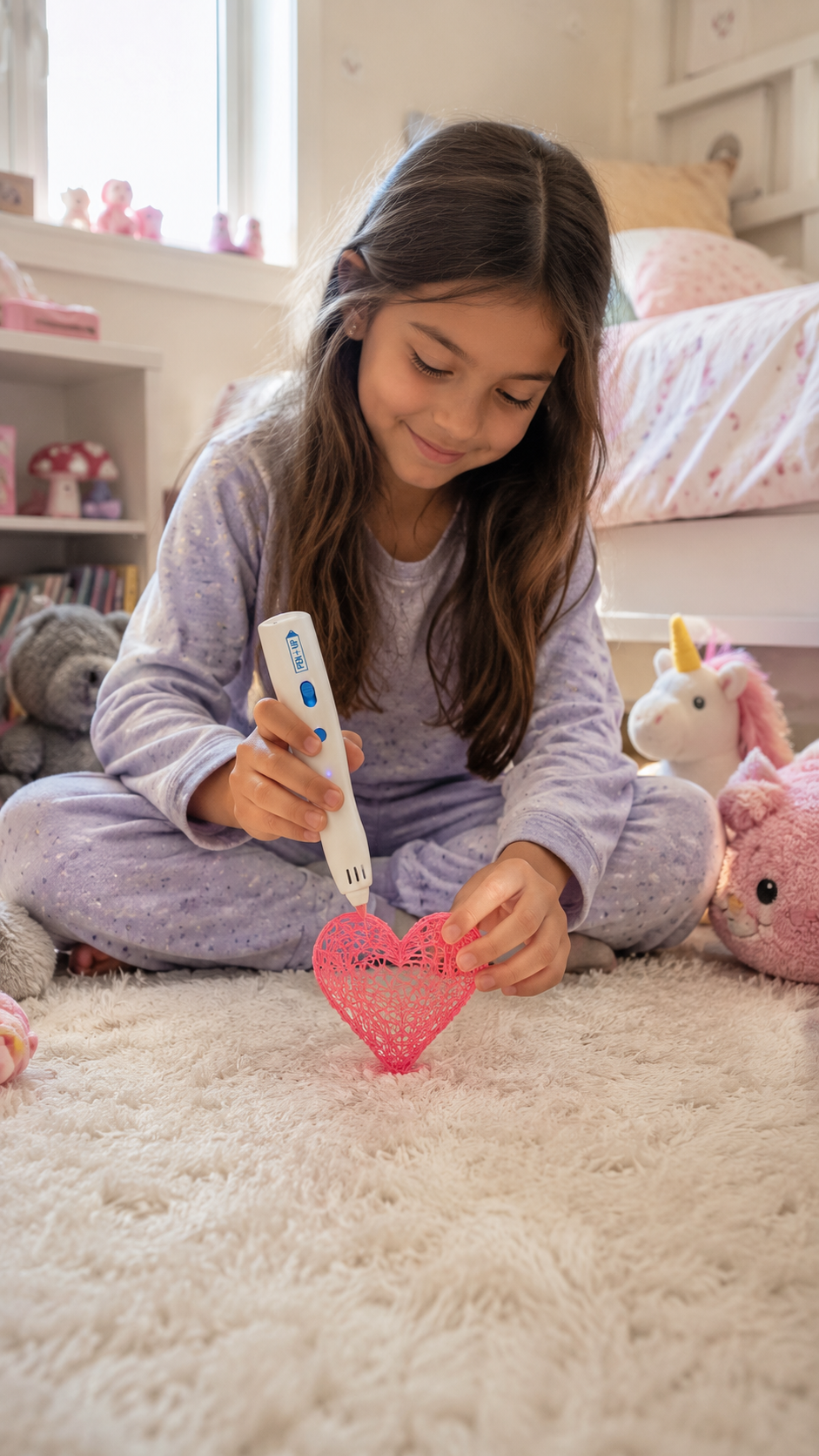
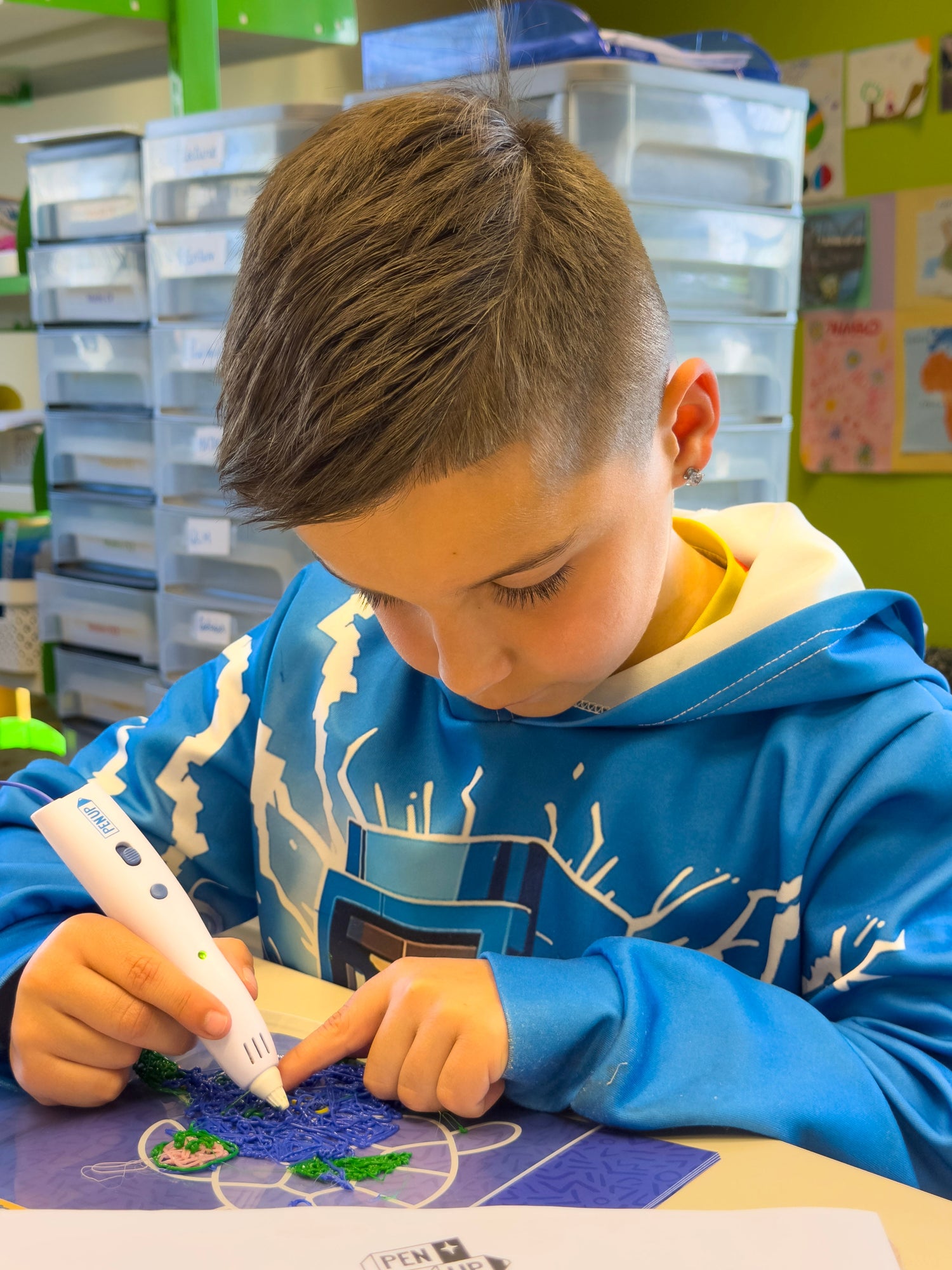
A 3D pen works like a tiny handheld 3D printer. You insert a plastic filament at the back. The pen heats it inside until it softens, a small motor pushes it forward, and it comes out through the tip. It hardens in the air within seconds: the child draws in three dimensions, then lifts their creation off the paper.
It comes down to the temperature needed to melt the filament. PLA and ABS, the filaments used in standard 3D pens, require a nozzle heated to around 200 °C. At that temperature, touching the tip or the freshly extruded filament can cause burns: these pens are not designed for a young child.
The Pen'Up 3D pen was designed differently. Its Fil'Up spools are made mainly of polycaprolactone, a material that melts at around 60 °C inside the pen. As a result, the tip never exceeds 35 °C, a figure verified in a laboratory. Children can touch the tip without risk of burns, allowing them to create on their own.

| Criterion | Standard 3D pen (PLA or ABS) | Pen'Up 3D pen |
|---|---|---|
| Tip temperature | around 200 °C | never above 35 °C, verified in a laboratory |
| Filament | PLA or ABS | Fil'Up, made mainly of polycaprolactone, which melts at around 60 °C inside the pen |
| Touching the tip | best avoided | no risk of burns |
| Age | depends on the manufacturer | independent use from age 6, with no upper age limit |
| Compliance | varies by model | meets applicable requirements, bears the CE marking, has undergone EN71 testing |
Be careful not to lump them all together: there are several low-temperature 3D pens for children, and they do not heat up to 200 °C. The right approach is to read the temperature stated by the manufacturer, in numbers. For a closer look at the two types, read our article cold vs. hot 3D pens: what are the differences for kids?
Is a 3D pen toxic?
The published measurements concern desktop 3D printers. In 2016, a team measured emissions from several printers using different filaments (Azimi et al., Environmental Science & Technology, 2016): they emit ultrafine particles and volatile organic compounds, in amounts that vary widely by filament. ABS was among the highest-emitting materials. These machines heat plastic to high temperatures, so ventilating the room remains a good practice.
A low-temperature 3D pen is different. Fil'Up melts at around 60 °C and does not release toxic fumes. The one important tip: use Fil'Up spools, which are designed for the pen. Filament that isn’t made for it can clog it; if that happens, our guide clogged 3D pen: what to do explains how to clear it.
From what age can children use it, and do you need to stay beside them?
Key age-by-age guidelines:
- Under 36 months: the pen is not suitable. Keep it out of reach of toddlers in the home.
- Ages 3 to 6: children can use the pen independently from age 6. Before then, creating together is a good way to start: the adult guides the child’s hand, while the child chooses the colors and shapes.
- From age 6: children can create independently. You don’t need to stay beside them out of concern about burns. The pen automatically goes into standby after 2 minutes of inactivity. It’s cordless while drawing (about 1 hour of battery life) and recharges via USB-C in about 1 hour, with a 1.50 m cable that even lets you keep using it while it charges.
- And after that? There’s no upper age limit: teens and grandparents use it too.
To choose the right time for your child’s personality, our article what age to give a child a 3D pen explains what children can make at each age.
How can you tell whether a 3D pen is suitable for a child?
Five things to check before buying:
- A temperature stated in numbers. A vague “doesn’t get hot” is no substitute for a precise figure. For the Pen'Up 3D pen, the tip never exceeds 35 °C, as verified in a laboratory.
- A clearly identified filament and available refills. Knowing which filament the pen uses, and being able to buy more easily, means you won’t have to improvise with an unsuitable filament.
- Clearly stated compliance. Look for the CE marking and a reference to EN71 testing, the European toy safety standard.
- A clearly stated minimum age on the box and product page.
- Instructions in French and reachable customer support for questions or help with a malfunction.

Here’s how the Pen'Up 3D pen meets these five criteria. Pen'Up 3D is a French brand; the pen is developed in France, with a French customer support team in Montauban that responds within 24 hours. The pen meets applicable requirements, bears the CE marking and has undergone EN71 testing. Fil'Up refills are easy to buy, such as a set of 3 spools for €7.99. More than 25,000 families have already chosen it: Pen'Up 3D has a rating of 4.85/5 from more than 2,400 verified reviews (Judge.me).
Which 3D pen can you give for Christmas 2026 with peace of mind?
If your child is 6 or older, here are the Pen'Up 3D pen packages (prices listed on penup3d.com):
- the pen alone: €49.99;
- the Discovery Pack: €69.99, with 4 spools, the Discovery Booklet (30 designs), 2 stencils and finger guards;
- the Complete Christmas Pack: €99.99, with 18 spools of 10 m each (including 7 new colors), three booklets (Discovery: 30 designs; 3D Expert: 17 designs; Farm Animals: 20 designs, included free), 2 Pad'Up stencils, 3 finger guards and a lifetime warranty included at no extra cost;
- the Maxi Christmas Pack: €129.99, consisting of the Complete Christmas Pack plus your choice of the Mechanics Kit or Floral Kit (Floral Kit available for preorder).
For added peace of mind, the lifetime warranty is included with the Complete Christmas Pack and Maxi Christmas Pack, and available as a €19.99 option with the other packages. It covers a replacement pen if it breaks down, never a refund, and the two-year statutory warranty applies in all cases. Use code NOEL10 for 10% off the entire store through December 31. Starting November 26, delivery takes 24 to 48 hours in mainland France through December 24 (Christmas stock is limited).

More than 100 designs in the booklets (Discovery 30, 3D Expert 17, Farm Animals 20, Mechanics Kit 20, Floral Kit 17), plus free designs on penup3d.com.
Also read: the best 3D pen for kids for Christmas 2026, cold vs. hot 3D pens: the differences and what age to give a child a 3D pen.
FAQ: 3D pens and child safety
Is a 3D pen dangerous for a child?
It all depends on the temperature. A standard 3D pen heats up to around 200 °C and can cause burns: it is not designed for a young child. On the Pen'Up 3D pen, designed for children, the tip never exceeds 35 °C, a figure verified in a laboratory. There is no risk of burns, and children can use it independently from age 6.
What are the toxicity risks associated with 3D printing?
A study of desktop 3D printers (Azimi et al., 2016) measured emissions of ultrafine particles and volatile organic compounds. These varied widely by filament, with ABS among the highest emitters. These machines heat plastic to high temperatures, so ventilating the room is a good practice. The Fil'Up spools for the Pen'Up 3D pen, by contrast, melt at around 60 °C, well below the temperatures used by those machines.
How does a 3D pen work?
You insert a plastic filament into the back of the pen, which heats it inside and pushes it toward the tip. The filament comes out soft, then hardens in the air within seconds, allowing you to draw in three dimensions. In the Pen'Up 3D pen, the filament melts at around 60 °C inside, and the tip never exceeds 35 °C.
What do reviewers say about the Pen'Up 3D pen?
The Pen'Up 3D pen has a rating of 4.85/5 from more than 2,400 verified reviews (Judge.me), which you can read on the reviews page at penup3d.com. More than 25,000 families have chosen it, and the brand received the 2023 Prix de l’Audace award.
How much does a 3D pen for kids cost?
On penup3d.com, the Pen'Up 3D pen alone costs €49.99, the Discovery Pack €69.99, the Complete Christmas Pack €99.99 (lifetime warranty included) and the Maxi Christmas Pack €129.99. Code NOEL10 gives you 10% off the entire store through December 31.